
I Ain't Got Time To Bleed
The melancholia of class and the privilege of feeling

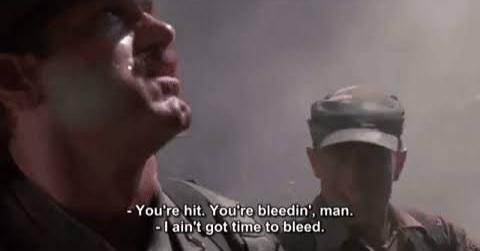
In a world that doesn’t let you rest, it is a privilege to feel sad. To stop and have the time to explore what your sadness means, where it really comes from, how it makes you feel, and why that’s important. Over the last three or four years, I’ve had a running bit that’s gradually fitted around the grooves of my mind like an uncomfortable leather boot eventually moulding around a foot, that of wrestling with men’s mental health.
It seems like most of my psychoses start as a bit. Isn’t it funny to take the piss out of having men’s mental health? You test the waters with jokes, see how your brain likes it, see how the audience of your subconscious reacts. Are those faceless guys in the back of my head laughing at me? Or with me?
These last years have been the first time I’ve ever felt extended periods of MMH. I’ve had long stints of depression, drink and drug addiction, years of unemployment. Plus I was reading a lot of Cormac McCarthy.
And as a ‘writer’, it feels like romanticising that sadness is kind of your job. Isn’t it interesting that I’ve struggled? Shouldn’t we explore how it feels?
In the sci-fi action horror classic Predator, an elite team of juiced to the gills commandos are killing generic guerillas in a jungle. In the crossfire, Ramirez, the ‘still huge but wears glasses so he’s the nerd’ of the comically alpha male soldiers group, points to the impossibly large bicep of Blain, played by former WWE wrestler Jesse Ventura and says: “You’re hit. You’re bleeding, man.” in a state of quiet panic. Without flinching, turning around, or taking his eye off his next target, Blain replies: “I ain’t got time to bleed.”
I recently read a book called The Melancholia of Class, by Cynthia Cruz, in which she repeatedly discusses the distance with which middle class people can view sadness. When I feel sad, through comedowns, heartbreak, or a myriad of self-inflicted or relatively minor problems, I’m essentially outside of it looking in.
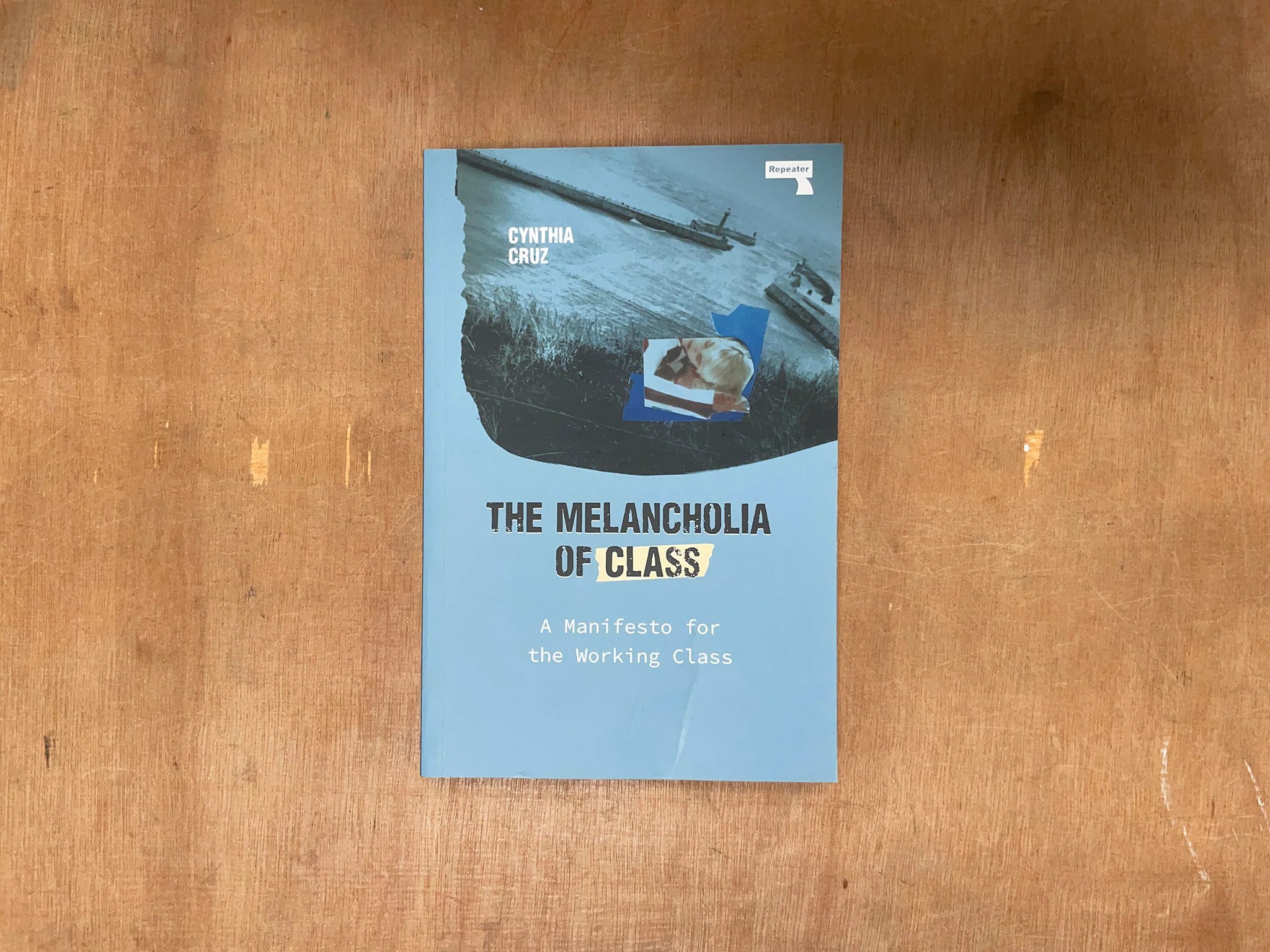
I have the time to turn it around in my head, look at the different angles, see its nooks and crannies. I have the opportunity, via therapy and a supportive friends and family network, to explore the feelings. I have the confidence to express what, and how important, my feelings are out loud without pause.
Working class people, Cruz argues, feel the same tone and colour of struggle and sadness as the middle class, but it is magnified and then hurried away by their societal standing. The middle class get time and space to wallow and pontificate, like Ramirez noticing the blood, but the working class, like Blain, dealing with the wound, ‘don’t have time to bleed’.
From the endless brutality of capitalism that constantly seeks to denigrate and exploit them, or forces them to ‘make something of themselves’ i.e. to change themselves into the prevalent middle class ideology of neoliberalism, the working class are living between two worlds. The world they’re from, that the assumed ideology denies or belittles, and the world that won’t accept them but assumes they want to ‘elevate’ themselves to, that doesn’t understand or listen to them.
This causes the melancholia from the title, lifted from Sigmund Freud’s original theory, namely the feeling of unknown or unfelt loss of self. In the modern world, one has to deny the real self to fit in with the forced self that neoliberalism demands of you.
It was a massively eye opening book for me that’s rattled around in my head ever since. Suddenly it doesn’t really seem that interesting that I’ve struggled. Everyone is struggling, feeling. Most people don’t find it funny or interesting, they just get on with it because they need to survive. And my sense of detachment, this wonder at my predicament, and romanticisation of my sadness, at the bad things that keep magically and repeatedly happening to me, is a privilege.
There’s another quote I always come back to, from someone just as comically alpha male as the Predator cast, in his own way, the Slovenian philosopher Slavoj Žižek. He says:
“The obsessive desire to know yourself is itself a pathology. You’re not healed when you wholly understand yourself but when you don’t matter to yourself anymore. You’re healed once you internalise you must fight for something bigger than yourself: you fight for your family; you fight for love; you fight for art; you fight for meaning. The real goal of psychoanalysis is paradoxical; it’s precisely to liberate you from yourself - to bring you to the point where you can finally forget about yourself and work for a greater cause.”
It’s quite funny that after travelling through my recent years of bad men’s mental health, a blinkered tunnel, in which I became so unbearably self absorbed, through therapy, reading and writing about The Self, and endless comfort and placating discussions from those around me, I’ve come out the other side as an old fashioned curmudgeon about it all. “Mental health? Just get on with it!”, and so on.
Of course, the reason it’s called “The Melancholia of Class”, and not “Melancholia is Class, Actually”, is that not having the time to properly sit with your feelings and feel sad, and process that correctly because of social duress, often causes unbearable anguish. It’s not revolutionary to valourise the repression of emotions. But if starving yourself is unhealthy, so is binging.
Having to ignore that you’re clearly wounded because you’re forced into a constant daily, weekly, monthly struggle isn’t a good thing. But at the opposite end of the spectrum there’s a gorging on self actualisation that leads to a form of moral impotence. You’re so busy ‘working on yourself’ that everyone else is secondary.
And the modern world is very particular with who gets to exist in and between this psychological feast and famine.
This relentless focus on the individual, which Cynthia Cruz describes as the implicit, silently accepted ideology of neoliberalism, is the idea that we are all born equal and any failings and successes you may encounter are entirely up to you. Self discovery in this framework becomes a form of optimisation - how you can find out the psychological problems holding you back, how you can ‘clear your mind of distractions’ so your life is better, more successful, more efficient within an individualist framework.
I kept wanting to know what was really wrong with me, as if I would eventually find the smoking gun somewhere in my subconscious, like a diver seeing an illuminated pearl at the bottom of the ocean. And then it would all make sense, my selfish behaviour, my incessant death drive. A delicious justification for the cloying feeling that my sadness wasn’t romantic, but sybaritic - really good word by the way - a means of receiving the constant validation that modern dopamine receptors require.
And in the end, on the other side of the tunnel, I realised the point was not to reach a crescendo of understanding, which would magically cure me. But it was surely just to understand my many faults and how they manifest better, so that they’re less likely to impact others. And saving all of that, just getting on with it.
Seen through the prism of Ai thoughts have a cost.
Ai gives us a tangible baseline for what it means to think.
You can put a verifiable cost on the effort it takes a neural network to respond to your question "find me an all inclusive in on the costa brava where the drinks aren't shit".
The mechanics of your mind are not free.
The simplest reduction of this essay is to ask "why would anyone spend so much energy on self loathing?"
The unit cost of being a melt is high.
Stoicism or nihilistic reasoning is simply being frugal with your own energy.
The reason ignorance is bliss is because being dumb is a holiday for your nervous system.
The reason smart people are depressed is because self awareness is the spinning session that never fucking ends.
I have older friends in their 60s who make fun of me for doing therapy. they live like characters in a Frank Sinatra song. Up, down, love, loss. etc I graft, I give it a shot, i'm still here. I dunno which is the right way. Im glad you wrote about it. Thank you xxx